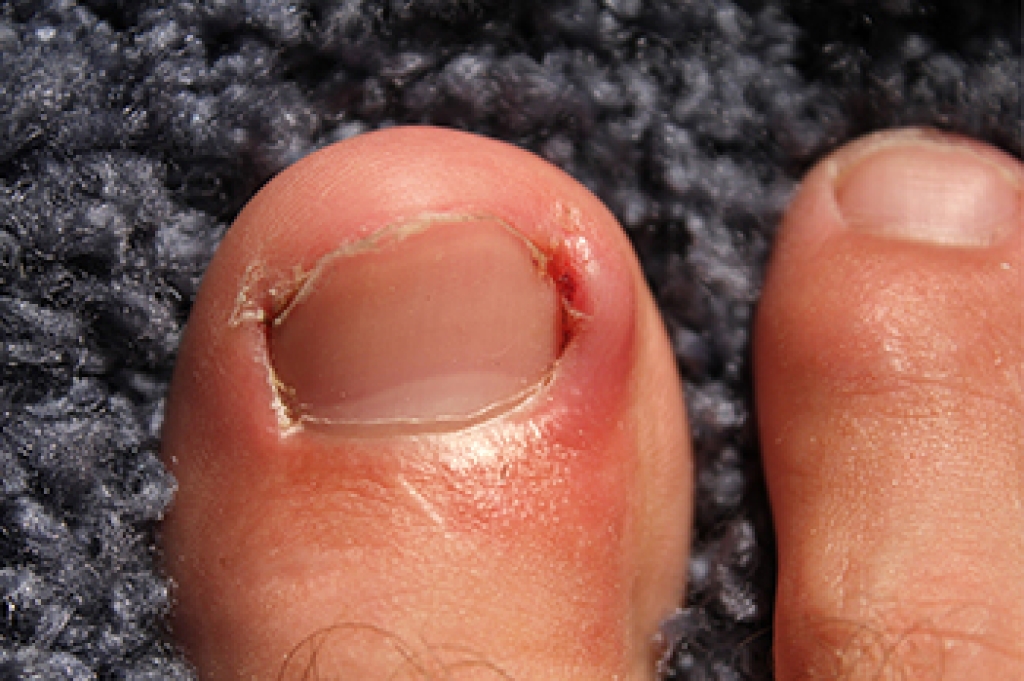
An ingrown toenail happens when the edge of a nail grows into the surrounding skin instead of resting above it. This can cause tenderness, swelling, redness, and sometimes drainage, if an infection develops. Tight shoes, improper nail trimming, injury, and natural nail shape can all play a role. Early cases may improve with conservative care, but some ingrown nails continue to return or become increasingly painful. When simpler treatments do not bring relief, a podiatrist may recommend a minor in-office procedure that removes the problem section of the nail while preserving the rest. This targeted approach is commonly chosen because it is straightforward, well-tolerated, and associated with a smooth recovery for many patients. The goal is to ease discomfort and lower the chance of the issue returning. If you have a painful or recurring ingrown toenail, it is strongly suggested that you visit a podiatrist for appropriate treatment solutions.
Ingrown toenails can become painful if they are not treated properly. For more information about ingrown toenails, contact one of our doctors of New England Foot & Ankle . Our doctors can provide the care you need to keep you pain-free and on your feet.
Ingrown Toenails
Ingrown toenails occur when a toenail grows sideways into the bed of the nail, causing pain, swelling, and possibly infection.
Causes
- Bacterial infections
- Improper nail cutting such as cutting it too short or not straight across
- Trauma to the toe, such as stubbing, which causes the nail to grow back irregularly
- Ill-fitting shoes that bunch the toes too close together
- Genetic predisposition
Prevention
Wearing proper fitting shoes and using proper cutting techniques will also help decrease your risk of developing ingrown toenails.
Treatment
Ingrown toenails are a very treatable foot condition. In minor cases, soaking the affected area in salt or antibacterial soaps will not only help with the ingrown nail itself, but also help prevent any infections from occurring. In more severe cases, surgery is an option. In either case, speaking to your podiatrist about this condition will help you get a better understanding of specific treatment options that are right for you.
If you have any questions, please feel free to contact our offices located in Wakefield, MA, Nashua and Derry, NH . We offer the newest diagnostic and treatment technologies for all your foot care needs.
